
Cars and factories have become cleaner in many parts of the world. Yet a growing source of pollution is proving much harder to control: wildfire smoke. A new World Meteorological Organization report warns that more frequent and intense fires are making clean-air progress increasingly fragile.
| Based on: WMO Air Quality and Climate Bulletin No. 6 (September 2026), together with recent European research on the health effects of wildfire-related PM2.5. |
For years, cleaner engines, better fuels, industrial controls and tighter air-quality rules have helped reduce some of the pollution produced by traffic and factories. In many cities, that progress is real. But there is a problem that does not stop at a city boundary, a national border or even a coastline.
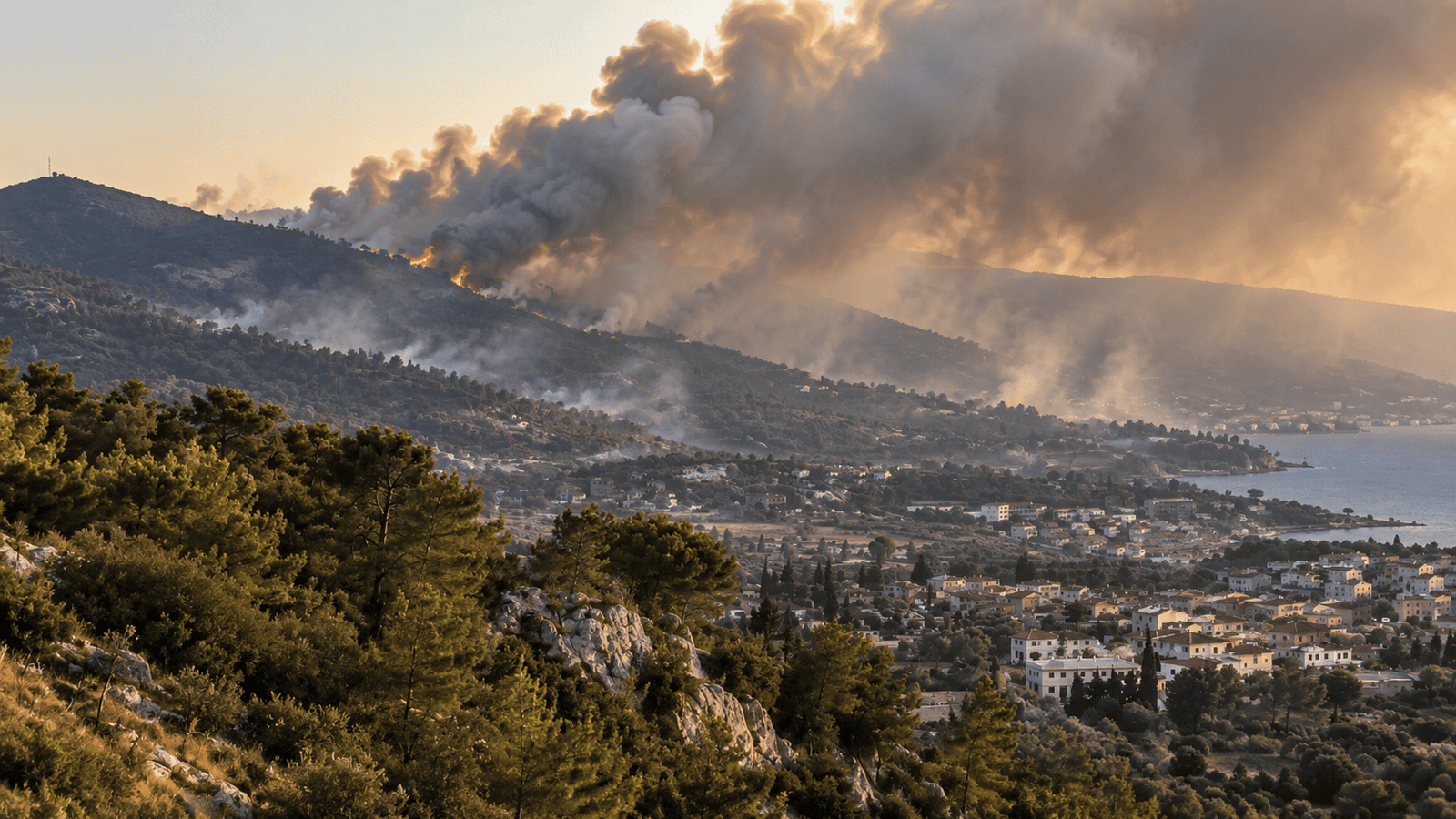
Smoke from a large wildfire can travel hundreds or even thousands of kilometres. You do not need to see flames to breathe what they leave behind. A clear blue sky can turn hazy, the smell of smoke can arrive from a distant region, and tiny particles can enter homes, schools and workplaces far from the fire itself.
That is the warning behind the World Meteorological Organization’s latest Air Quality and Climate Bulletin. Published in September 2026, the report says that rising pollution from wildfires and heatwaves risks undermining international efforts to improve air quality and protect human and ecosystem health.
The particles you cannot see are often the ones that matter most
One of the main concerns is PM2.5 (particles with a diameter of 2.5 micrometres or less). They are so small that they can travel deep into the lungs and some can pass into the bloodstream. PM2.5 comes from many sources, including traffic, industry, heating, agriculture, dust and fire.
Wildfire smoke is not simply ‘ordinary air pollution with a smoky smell’. Burning vegetation, soils, buildings and other materials creates a complex mixture of fine particles and gases. Its composition changes with the type of fuel, the temperature of the fire and what is being burned. This matters because particles from fire may not have exactly the same health effects as particles from other sources.
A large European study published in The Lancet Planetary Health in 2025 looked at daily mortality across 654 regions in 32 European countries, covering a population of about 541 million people. The researchers found that short-term exposure to wildfire-related PM2.5 was associated with higher all-cause, cardiovascular and respiratory mortality.
Perhaps the most striking result was methodological. When researchers estimated wildfire deaths using the usual health-risk value for total PM2.5, regardless of where the particles came from, the mortality burden from wildfire smoke was underestimated by 93%. In simple terms: treating all fine particles as if they were equally harmful can hide much of the risk associated with smoke from fires.
| Extreme fire-smoke events | About 3 times more frequent globally than in the 1990s |
| Estimated additional deaths | Nearly 100,000 per year during 2010-2018 in a study cited by WMO |
| European mortality estimate | Wildfire-related PM2.5 risk can be substantially higher than total-PM2.5 assumptions suggest |
| Spain | North-western Spain was a PM2.5 hotspot in 2025 after exceptional late-summer fires |
Why cleaner cars are not enough
This creates an uncomfortable paradox. A country can reduce pollution from cars, power plants and industry and still experience severe episodes of dirty air because smoke arrives from a wildfire. The WMO notes that regulations in Europe and North America have reduced industrial and transport-related PM2.5, while exposure to fire-related PM2.5 has increased.
The change is visible in the global picture. The WMO cites research indicating that extreme fire-smoke events have tripled since the 1990s. Those events were associated with an estimated nearly 100,000 additional deaths each year between 2010 and 2018, and the real burden may be higher.
Spain offers a very tangible example. In the WMO assessment of 2025 conditions, north-western Spain appeared as a hotspot for PM2.5 after exceptional late-summer fires. The important point is not that every year or every part of Spain experiences the same problem. It is that one intense fire season can produce a sharp deterioration in air quality even where long-term emissions policies have been working.
And smoke does not respect the map. A fire in one region can affect people far away. That makes wildfire pollution different from many traditional urban sources: reducing local traffic emissions will not prevent a smoke plume from crossing a border.
Heat makes the problem worse in another way
Wildfires are only one side of the story. The WMO report also highlights ground-level ozone, a pollutant that forms more readily during hot, sunny and stagnant conditions. Unlike the protective ozone layer high in the atmosphere, ozone near the ground is harmful to people, crops and ecosystems.
This means heatwaves can create a double burden. Hot and dry conditions can increase fire risk, while the same heat can encourage the formation of ozone. As the climate warms, air-quality management becomes harder because climate conditions can amplify pollution even while direct emissions from some human activities are being reduced.
This is why the WMO argues that climate policy and air-quality policy cannot be treated as separate problems. Cutting fossil-fuel emissions can help both, but societies also need better fire prevention, land management, smoke forecasting, public-health planning and monitoring.
What does this mean for ordinary people?
For most of us, wildfire smoke becomes real only when we can smell it or see the sky change colour. But visible smoke is not a reliable measure of exposure. Fine particles can remain in the air after the dramatic images have disappeared, and pollution can reach communities that are nowhere near the flames.
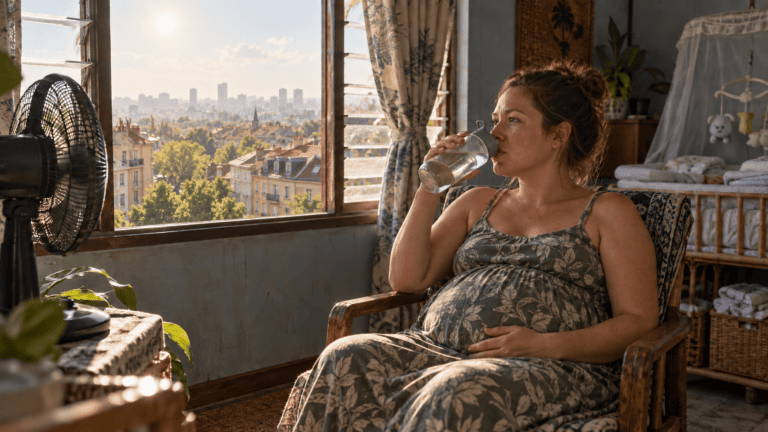
People with asthma, chronic lung disease or cardiovascular disease are particularly vulnerable, as are older people, pregnant women and children. But wildfire smoke is not only a concern for people who already have health problems. The evidence increasingly points to effects across the wider population, especially when exposure is intense or repeated.
The practical response is not complicated. During a smoke episode, reliable air-quality information matters. Reducing strenuous outdoor activity when pollution is high, keeping indoor air as clean as possible and following public-health guidance can lower exposure. But individual behaviour can only go so far. No one can choose not to breathe.
The bigger lesson: clean air is not a finished job
The success of past air-quality rules can sometimes make clean air feel like a problem we have already solved. The new evidence suggests otherwise. We have become better at controlling pollution from many sources we can regulate directly, but climate-driven hazards are changing the background conditions in which those rules operate.
That does not mean decades of environmental regulation were wasted. Quite the opposite: without those reductions, the air during wildfire episodes would be added to a much dirtier baseline. The point is that previous gains now need protection.
A warmer world with more extreme fire weather can push pollution back into places that had spent years cleaning it up. The challenge is no longer simply to make cars and factories cleaner. It is also to make landscapes, communities and health systems more resilient to smoke.
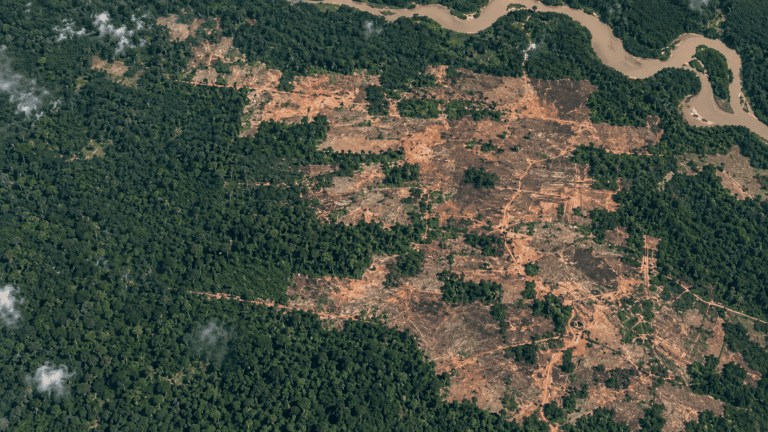
Wildfires are usually described in hectares burned, homes lost or flames contained. Those numbers matter, but the fire does not end at the edge of the burn scar. Its smoke can travel on for days, crossing borders and entering lungs far away. In that sense, the true footprint of a wildfire is much larger than the land it burns.
| The takeaway: Wildfire smoke is becoming a larger part of the air-pollution problem. The latest WMO assessment suggests that rising fire-related PM2.5 and heat-driven ozone can weaken hard-won improvements in air quality. Protecting clean air now requires not only controlling traditional emissions, but also adapting to a climate in which smoke can travel farther and affect more people. |
Sources and further reading
World Meteorological Organization (2026). Air Quality and Climate Bulletin No. 6. Published 7 September 2026.
World Meteorological Organization (2026). “WMO bulletin shows air quality and climate interlinkages.” 7 September 2026.
Alari, A. et al. (2025). Quantifying the short-term mortality effects of wildfire smoke in Europe: a multicountry epidemiological study in 654 contiguous regions. The Lancet Planetary Health. DOI: 10.1016/j.lanplh.2025.101296.
WMO Bulletin (2026). The Long Shadow of Wildfires: Smoke, Air Quality and Health.