
When circularity creates trade-offs
Reusing materials can create clear benefits, but transport, contaminants, energy use and substitution effects can change the balance. Evidence helps identify where circularity really performs.
NEST combines environmental science, geospatial analysis and applied innovation to help organisations understand change, reduce risk and create measurable impact.
We work across soils, ecosystems, climate and territories, connecting field evidence with data and implementation so that complex environmental questions become clearer decisions.
About NEST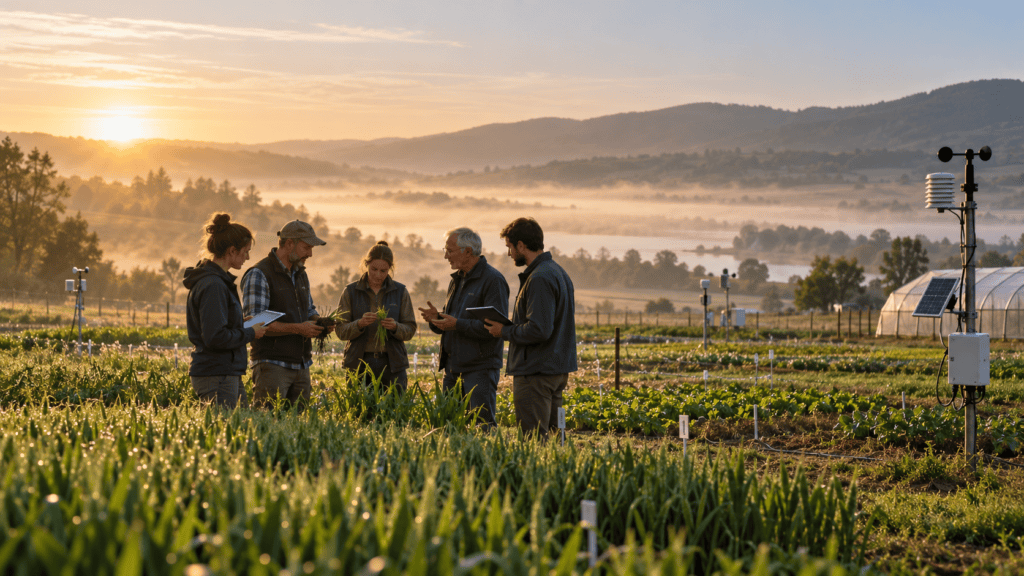
Benefit from our proven experience in Living Lab certification and ENoLL assessment processes.
An evidence-led assessment of circular resource options, environmental trade-offs and realistic routes to implementation.ChallengeExplain the environmental challenge, user need and context.ApproachDescribe the field, analytical, geospatial or co-creation methods…
View project ↗A practical resilience project linking climate risk, indicators and locally relevant adaptation choices.ChallengeExplain the environmental challenge, user need and context.ApproachDescribe the field, analytical, geospatial or co-creation methods used.NEST…
View project ↗A demonstration project combining field indicators, repeated monitoring and decision-ready reporting to understand soil response under environmental pressure.ChallengeExplain the environmental challenge, user need and context.ApproachDescribe the field, analytical,…
View project ↗A spatial evidence workflow integrating Earth observation, GIS and ground information to reveal environmental patterns and priority areas.ChallengeExplain the environmental challenge, user need and context.ApproachDescribe the field, analytical,…
View project ↗Tell us what you need to understand, improve or demonstrate. We will help turn the question into a practical pathway.
Start a conversationStarting tools…
Text size: 100%
Use visible transcripts for audio and video content. Site editors can add them with the NEST transcript shortcode.
You can change these choices at any time. Essential cookies remain active because the website cannot function properly without them.