
How a warming climate is increasing pressure on expectant mothers and their babies
Heatwaves are not only a meteorological hazard. They are increasingly being studied as a maternal and newborn health risk. A growing body of research has found associations between exposure to very high temperatures and premature birth, low birth weight and stillbirth, while scientists are still working to establish how much heat contributes to any individual outcome.
A risk that can go unnoticed
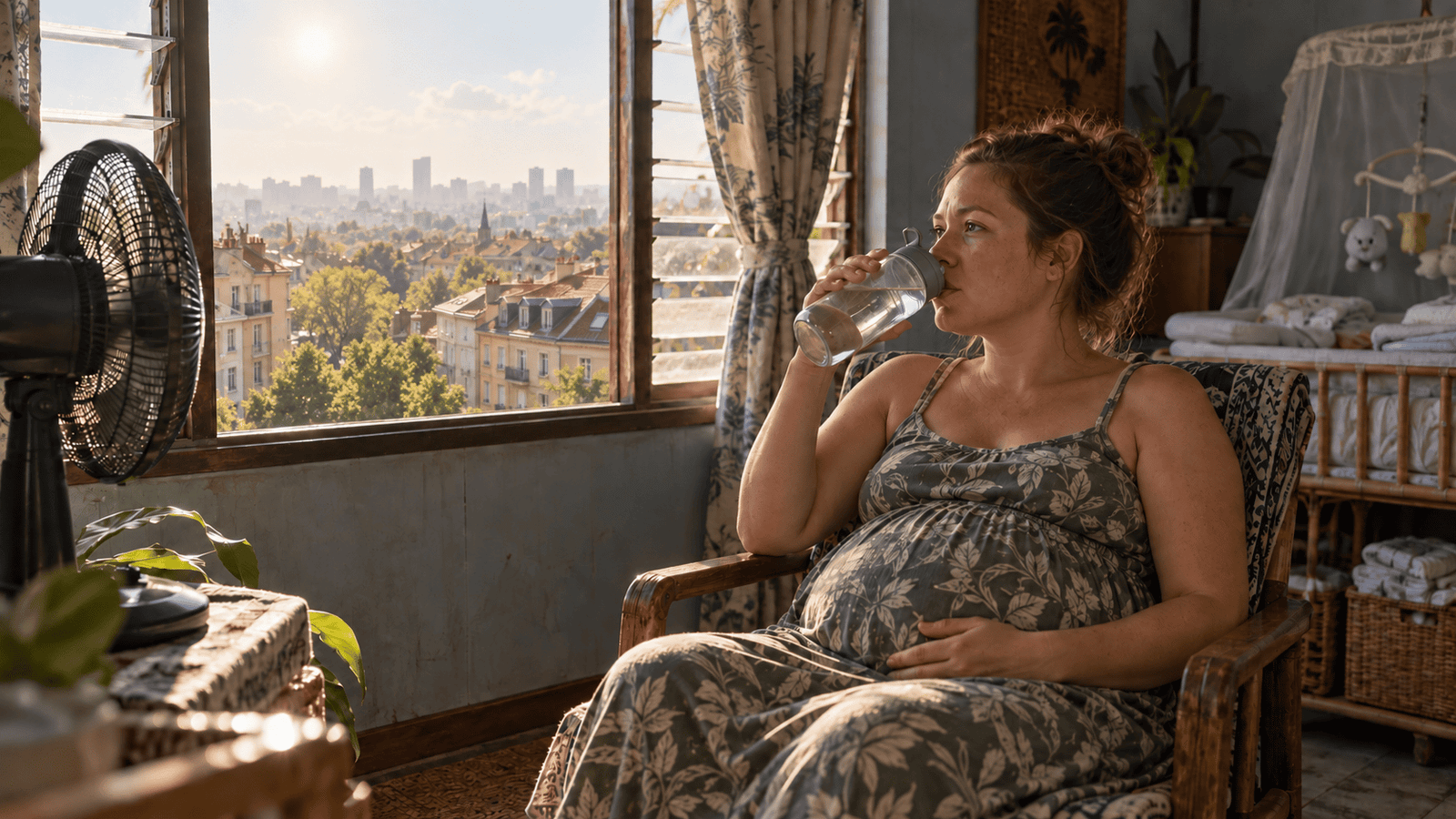
Pregnancy changes how the body regulates temperature. The heart works harder, body temperature rises slightly and the circulatory system must supply oxygen and nutrients to both mother and baby. During extreme heat, that additional demand can make it harder to cool down safely.
Dehydration may reduce blood volume and affect the flow of blood to the placenta. Researchers are also examining whether heat stress can trigger inflammation or hormonal changes that contribute to early labour. Another possibility is that the body redirects more blood towards the skin in an attempt to release heat, temporarily reducing the supply reaching the placenta.
There is no single biological explanation yet. Hundreds of studies point in the same concerning direction, but much of the evidence comes from observational research, which can identify patterns without proving that heat alone caused a particular birth outcome. Researchers are also investigating possible links with gestational diabetes and certain congenital abnormalities, although those relationships remain under study.
Palau shows the scale of the problem
Palau, a small island nation in Micronesia in the western Pacific, offers one illustration of what a warmer climate may mean for pregnancy, although it cannot by itself establish a causal relationship. Researchers have estimated that pregnant women there experienced an average of 77 pregnancy heat-risk days each year between 2020 and 2024. The measure refers to days that are unusually hot compared with local historical conditions, not to a universal temperature threshold.
That distinction matters. A temperature that is exceptional in one region may be common in another, and the health effect will also depend on housing, access to water and cooling, work conditions and the availability of medical care. The figure should therefore be read as an indicator of changing exposure, rather than as a precise count of days on which harm is certain.
One woman interviewed for National Geographic in Palau experienced early contractions during pregnancy and eventually delivered her baby by caesarean section at 34 weeks. Her son spent his first weeks in neonatal intensive care. Her experience illustrates how heat can add another layer of risk to an already demanding medical situation.
Scientists are searching for a safe threshold
At the University of Sydney, researchers are using a controlled climate chamber to study how pregnant women respond to combinations of heat, humidity and physical effort. Participants exercise in conditions approaching 30, 35 and 40 degrees Celsius while scientists monitor body temperature, sweating, heart rate and the baby’s heart rate.
The study is designed to improve understanding of the conditions under which the body may struggle to compensate for environmental heat; it has not yet produced a universal safe threshold. Meanwhile, the Gambia Heat in Pregnancy Study is following 764 pregnant participants in two regions of The Gambia. Researchers are combining detailed heat-exposure mapping with wearable sensors, questionnaires and ultrasound scans to assess maternal activity, sleep, foetal growth and placental blood flow. At delivery, maternal, placental and cord samples will be collected to investigate biochemical and epigenetic changes associated with heat exposure.
The burden is not shared equally
Exposure to heat depends on much more than the weather. A pregnant woman living in an insulated home with access to air conditioning and paid leave has more options than someone working outdoors, living in an overheated building or unable to afford the electricity needed to run a fan or cooling system.
Low income, poor housing, limited tree cover, air pollution and distance from healthcare can all increase vulnerability. Research in the United States has also highlighted racial and economic inequalities in exposure to heat and in rates of premature birth.
Night-time temperatures matter as well. When evenings remain hot, the body has less opportunity to recover from the stress accumulated during the day. Poor sleep and persistent heat may be especially difficult during the later stages of pregnancy.
Adaptation is already under way
While scientists continue to investigate the mechanisms involved, some programmes are testing practical responses. In Florida, climate-trained doulas visit pregnant women and new mothers, providing advice, cooling materials, water bottles and information about local cooling centres. These initiatives are promising, but they remain small compared with the scale of the exposure.
Other projects are testing financial support for pregnant workers during extreme heat, targeted weather alerts, shaded public spaces, better-ventilated homes and reflective roofs. Such measures also expose the limits of advice directed only at individuals: a woman cannot simply avoid heat if her job, housing or income gives her no realistic alternative.
A climate and public health challenge
Pregnancy may be one of the most sensitive ways of observing how climate change affects the human body. For many women, what was once an occasional period of discomfort is becoming a repeated health challenge during one of the most vulnerable stages of life.
Protecting mothers and babies from extreme heat will require better medical guidance, more research and investment in housing, workplaces and public infrastructure. The evidence is still developing, and important questions remain about thresholds, timing and biological mechanisms. That uncertainty is not a reason to wait: it is an argument for precautionary measures that reduce exposure while the science catches up.