
Soil, biodiversity and climate change in the FAO’s latest warning
For years, forest restoration has often been reduced to one simple image: planting trees. But science tells us that bringing an ecosystem back to health is far more complex. Sometimes trees need to be planted; sometimes the best intervention is to reduce pressure and allow nature to recover. And in many places, the first step is not in the canopy at all, but beneath our feet: in the soil.
The new State of the World’s Forests 2026 report (SOFO 2026), published by the Food and Agriculture Organization of the United Nations (FAO), carries a clear warning: the window for restoring degraded ecosystems is narrowing.
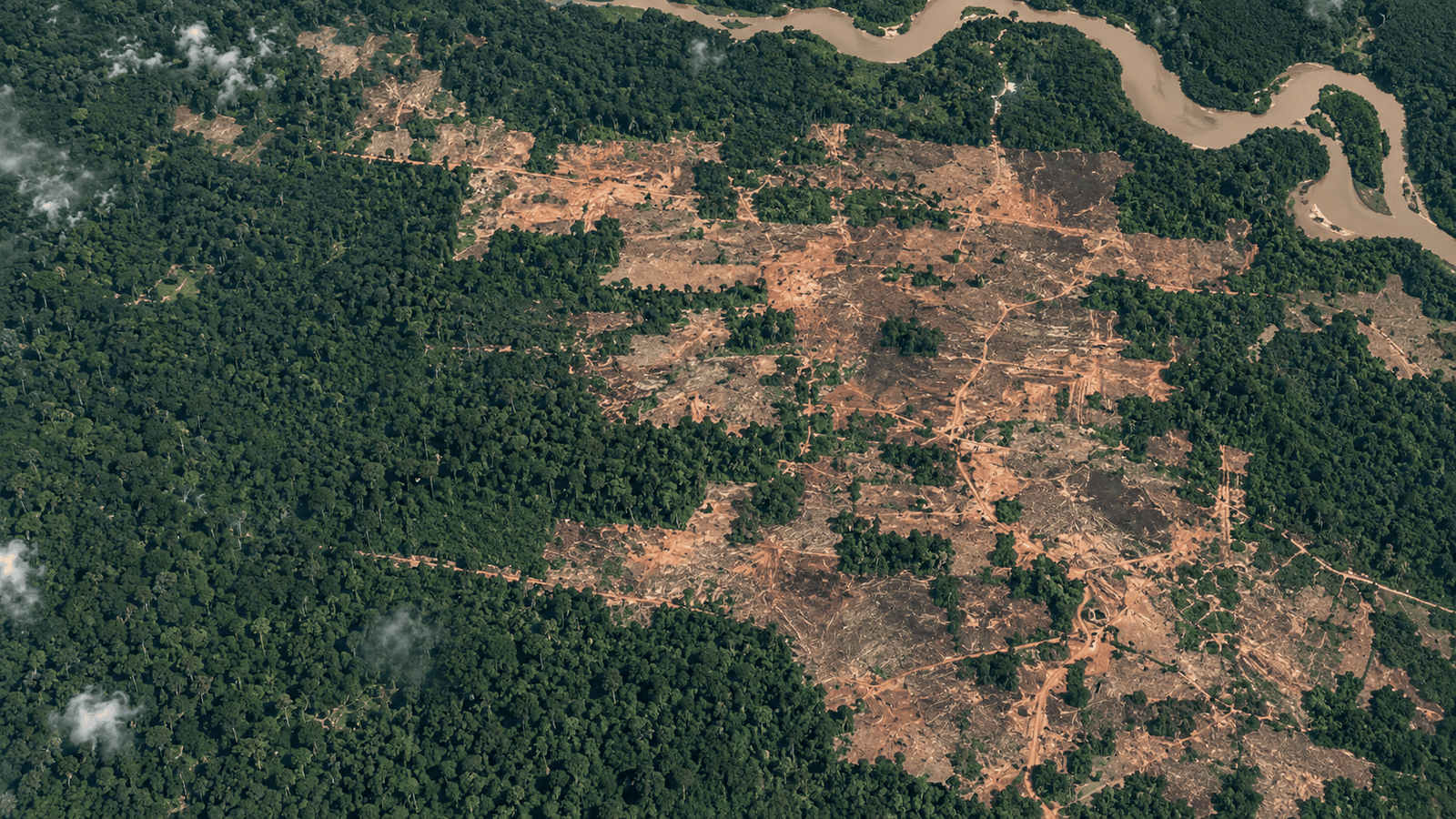
Forests still cover about 4.14 billion hectares, roughly one third of the world’s land surface, and store around 714 billion tonnes of carbon. Yet since 1990, approximately 489 million hectares have been lost to deforestation, while more than 460 million hectares of forest are degraded. Looking beyond forests alone, the FAO estimates that around 1.56 billion hectares of land are degraded worldwide.
The problem is not only that forests disappear. A forest can still look green from the air while having lost part of its ability to store carbon, regulate water, protect soil or support biodiversity. Wildfires, drought, overgrazing, landscape fragmentation, pests and climate change can all accelerate this decline. The FAO estimates that around 127 million hectares of forest are affected by fire each year.
Forest restoration is not simply about planting trees
One of the clearest messages from recent research is that natural regeneration can be an extremely powerful tool. A study published in Nature identified around 215 million hectares of deforested tropical land with suitable conditions for forests to recover naturally. If that regeneration were maintained for 30 years, the researchers estimated it could store about 23.4 gigatonnes of carbon in above-ground biomass.
But natural regeneration only works where some basic conditions remain: functioning soil, available water, seed sources, nearby trees and protection from repeated disturbance. That is why restoration may involve planting, but it can also mean controlling erosion, reducing grazing pressure, restoring watercourses, removing invasive species or simply giving an ecosystem the time and space it needs to recover.
Soil can determine whether restoration succeeds
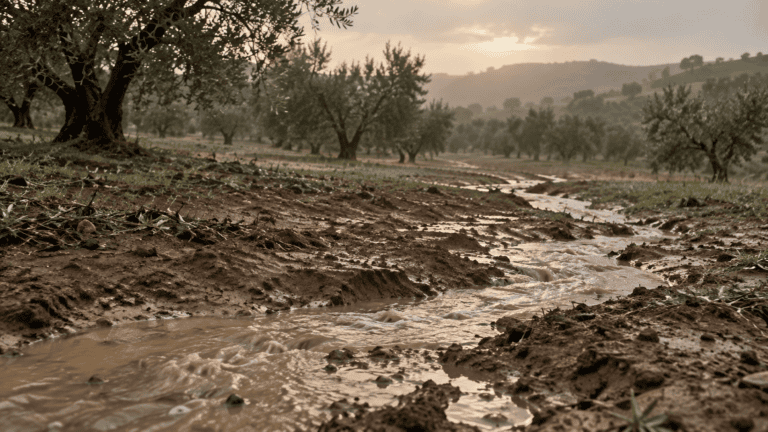
Soil is one of the most important — and least visible — parts of ecosystem restoration. When it loses organic matter, structure or microbial diversity, its ability to store water, support roots and recycle nutrients declines. A landscape can turn green again quite quickly and still remain ecologically fragile if the soil beneath it is degraded.
SOFO 2026 highlights cases in which topsoil recovery, reduced compaction and better seed management have been decisive. In Western Australia, decades of research on Banksia woodland damaged by mining improved seedling establishment by between five and eight times compared with the earliest restoration methods.
The message is simple: restoring a forest is not just about putting trees back into a landscape. It is about rebuilding the conditions that allow the ecosystem to sustain itself.
Turning green again does not mean an ecosystem is restored
Restoration also takes time. A study published in Nature Ecology & Evolution identified nearly 51 million hectares of regenerating tropical moist forest. Yet more than half of that area was five years old or younger, while only around 6% had persisted for 20 years or more.
That figure captures one of the central challenges. Recovery can begin relatively quickly; keeping it going for decades is far harder. Counting planted trees or treated hectares is therefore not enough. We need to know whether soils improve, biodiversity returns, carbon accumulates, water retention increases and ecosystems become better able to withstand future droughts or fires.
Spain is part of this story too
The FAO report includes a restoration case in El Bierzo, León, covering around 5,000 hectares. The initiative combines brown bear habitat recovery, wildfire prevention, ecological connectivity and economic activities linked to the landscape, including chestnut cultivation.
It is a useful example of an idea that is becoming increasingly important across Europe: restoring nature does not necessarily mean removing people from the landscape. It means finding a workable balance between biodiversity, production, wildfire prevention and rural development.
The question that really matters
Governments and international organisations have announced commitments to restore vast areas of degraded land. But hectares promised are not the same as ecosystems recovered.
The question should no longer be simply how many trees we have planted, or how many hectares have received some form of intervention. It should be how many ecosystems have regained the ability to function — and can continue doing so for decades.
Forest restoration means recovering soil, water, biodiversity, carbon and resilience, and making sure those gains remain after a project ends. That will be the real measure of success.
Scientific and documentary sources
- FAO (2026). The State of the World’s Forests 2026 (SOFO 2026).
- FAO (2026). Restoring forests and landscapes is critical to meeting global food security and development goals.
- Williams, B. A. et al. (2024). Global potential for natural regeneration in deforested tropical regions. Nature, 636, 131–137.
- Bousfield, C. G. & Edwards, D. P. (2025). The pan-tropical age distribution of regenerating tropical moist forest. Nature Ecology & Evolution, 9, 1205–1213.
- The Guardian (29 September 2026). UN warns of narrowing window to restore world’s forests.