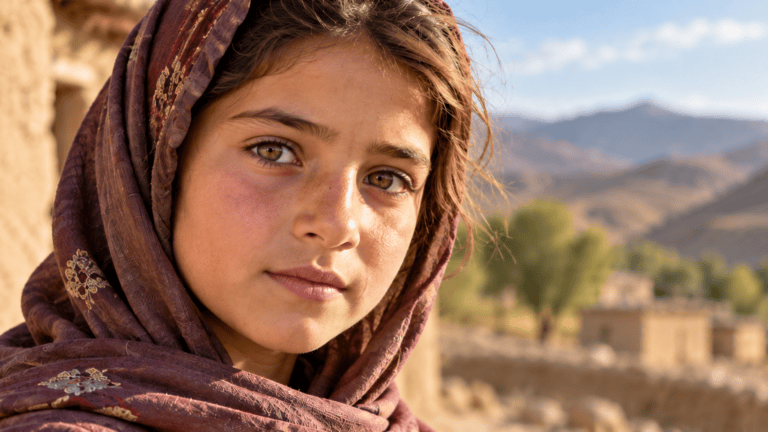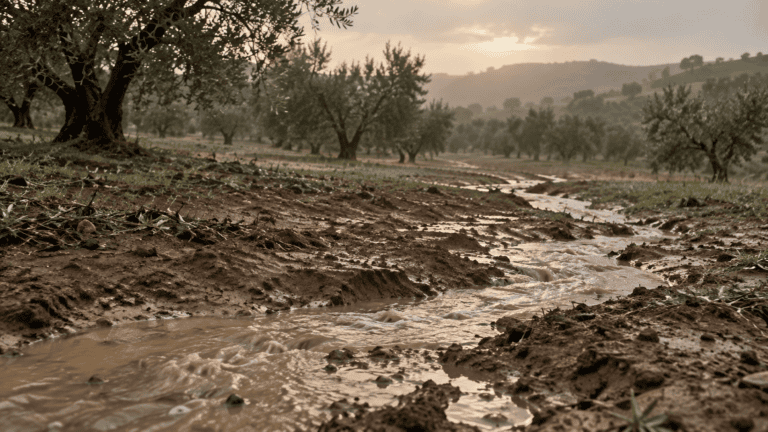

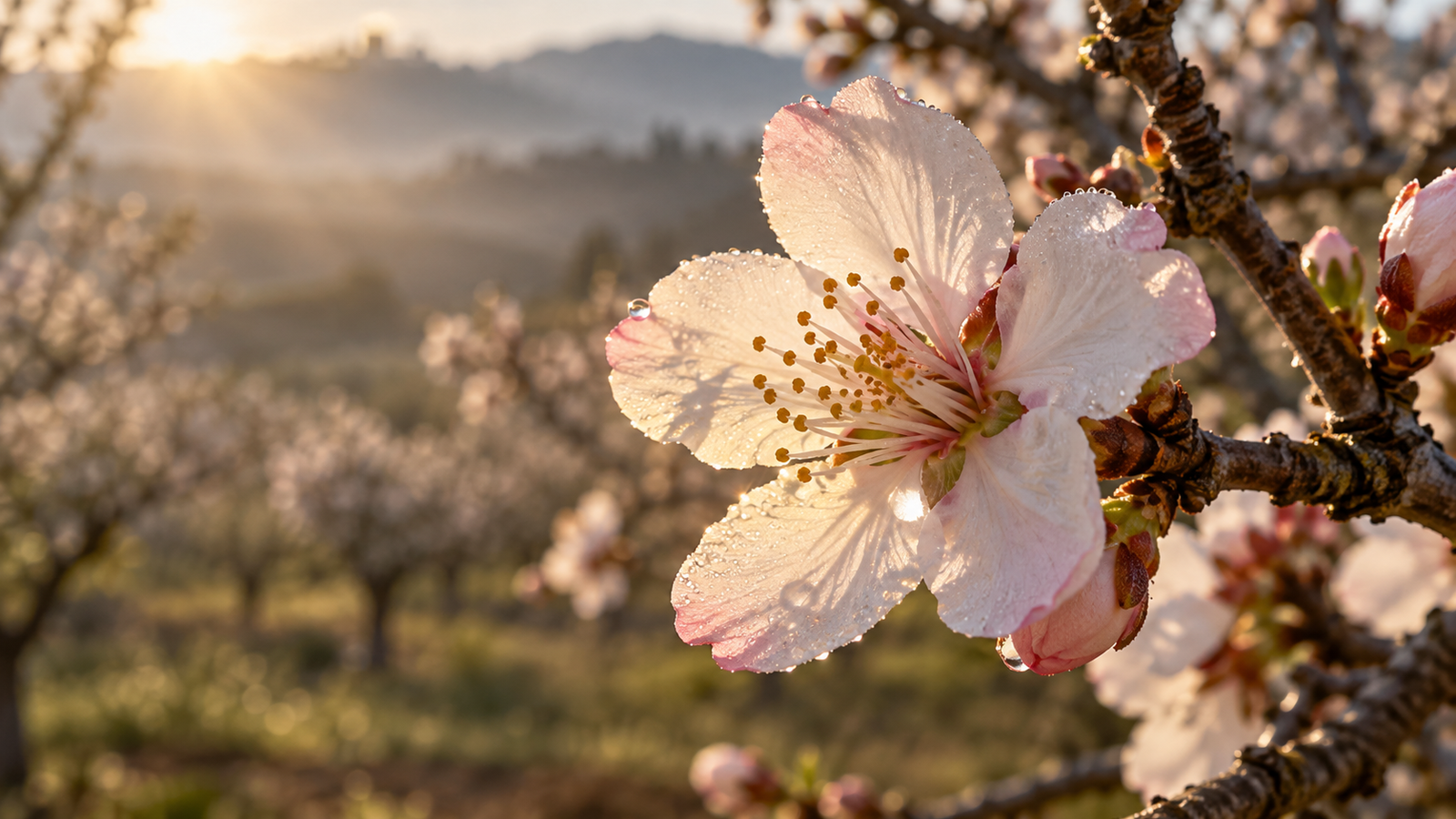
Rural depopulation is a persistent challenge across many parts of Europe. Creating viable work and local value is essential if rural communities are to retain people and sustain the landscapes on which their livelihoods depend. In farming areas, that means developing business models that make production economically worthwhile while improving the condition of soil, water and biodiversity.
A clear example can be found in south-eastern Spain. Almendrehesa connects farmers working with organic and regenerative practices to buyers looking for almonds with a stronger environmental and territorial story. Its model combines product differentiation, farmer partnerships and landscape restoration.
A territory under pressure
Almendrehesa emerged in the Altiplano Estepario, a dry, rural territory spanning parts of Almería and Granada in Andalusia and neighbouring areas. Water scarcity (less than 200 mm/m2/year) soil erosion and the gradual loss of rural population make it difficult to rely on conventional commodity production alone. The business was created in 2016 by a group of farmers together with the AlVelAl association and the Commonland Foundation, with the aim of building a market for almonds grown through regenerative, organic agriculture.
The company’s website reports that its network now includes more than 50 farmers and over 2,500 hectares of crops. It also reports more than 8,000 hectares under sustainable management when pastures and natural areas are included. These figures describe the company’s reported reach; they should not be read as independently audited impact measures.
How the business model works
The central offer is a differentiated agricultural product. Almendrehesa brings together almonds produced by local farmers, develops and sells them under a shared commercial identity, and connects that supply with consumers and business buyers in Spain and other European markets. Its range includes almonds and value-added products such as almond oil and flour, sold through its online shop and commercial partners.
This arrangement addresses a common problem for small farms: producing a higher-standard crop does not automatically secure a better price or a route to market. By aggregating supply and investing in marketing, processing and distribution, Almendrehesa can present a consistent offer to buyers and retain more of the value within the territory. Farmers, in turn, gain access to a specialised market and a buyer that recognises the practices behind the product.
The revenue logic is therefore based on selling differentiated products at a premium, through a mix of direct online sales and wholesale or export channels. Public reporting in 2025 described annual sales of around 500–600 tonnes of almonds in shell, with roughly 80% destined for export. That estimate illustrates the role of external markets, although export dependence also makes the business sensitive to logistics, competition and changing buyer demand.
What changes on the farms
The environmental proposition depends on what happens before the almonds reach the market. Regenerative approaches in this landscape can include maintaining plant cover between tree rows, applying compost, reducing soil disturbance, improving tree and habitat diversity, and restoring areas that are not cropped. These practices are intended to protect soil structure, reduce erosion, improve nutrient cycling and support biodiversity in a water-stressed environment.
AlVelAl helps farmers through technical advice, training and support for regenerative and organic transition. This is an important part of the model: farmers may need new knowledge, equipment and time to change practices, while the benefits to soil and landscape can take years to become visible. The commercial company links that work to market demand; the association and its partners contribute to the enabling environment around the farm.
Research on regenerative almond farming in south-eastern Spain provides useful context, but it is not an evaluation of Almendrehesa itself. A field study across five farms found that practices such as compost use and reduced tillage could improve several ecosystem services compared with conventional management. Separate economic modelling found that profitability depends on the practices and assumptions used: compost management performed better than the conventional scenario in that analysis, while some other regenerative options faced a financial gap. The lesson is that environmental gains need to be matched with farm-level economics, transition support and buyers willing to reward verified quality.
Where value is created and what remains difficult
Almendrehesa creates value at several points in the chain. Farmers can receive improved market access and, when the market allows, a price premium. The company captures value through branding, aggregation, product development and sales. The wider territory may benefit if healthier soils, restored habitats and viable farming help maintain rural activity.
A 2024 report in El País (daily) described Almendrehesa paying around €7.3–€7.5 per kilo to participating farmers, approximately 5% above the average organic almond auction price at that time. This is a dated example reported in the press, not a current price commitment. It nevertheless shows how a commercial mechanism can share part of the value of differentiation with producers.
The model also faces real constraints. Almond yields and quality vary with weather; water scarcity and drought can affect production; and regenerative transition may add costs before benefits arrive. Premiums are not guaranteed, and export-led sales require reliable volumes, quality control and competitive logistics. Long-term success depends on proving that buyers will keep paying for the product, while measuring environmental outcomes clearly enough to distinguish genuine improvement from marketing claims.
What other rural businesses can learn
Almendrehesa offers a useful pattern for places where small producers are spread across a large territory: organise supply, create a recognisable product, build routes to market, support farmers through the transition and connect the commercial offer to measurable landscape outcomes. The model is not a template that can be copied unchanged. Its performance depends on local crops, water availability, producer cooperation, logistics, regulation and the willingness of customers to pay for added value.
The broader lesson is to design the business around the relationship between place, production and market. Environmental practices become more durable when farmers can see an economic reason to adopt them, and rural development is stronger when more value stays close to the people managing the land.
How NEST can help
NEST has a powerful, innovative tool for identifying and assessing business models. It brings together environmental, territorial and socioeconomic information to help explore which models may fit a particular area, what conditions they require and what evidence should be checked before they are developed. The real cases shows why this analysis needs to consider the whole value chain: who produces, who adds value, how revenue is distributed and which environmental outcomes can be measured.
Contact us to learn more about NEST’s tool or discuss how it could support your project.